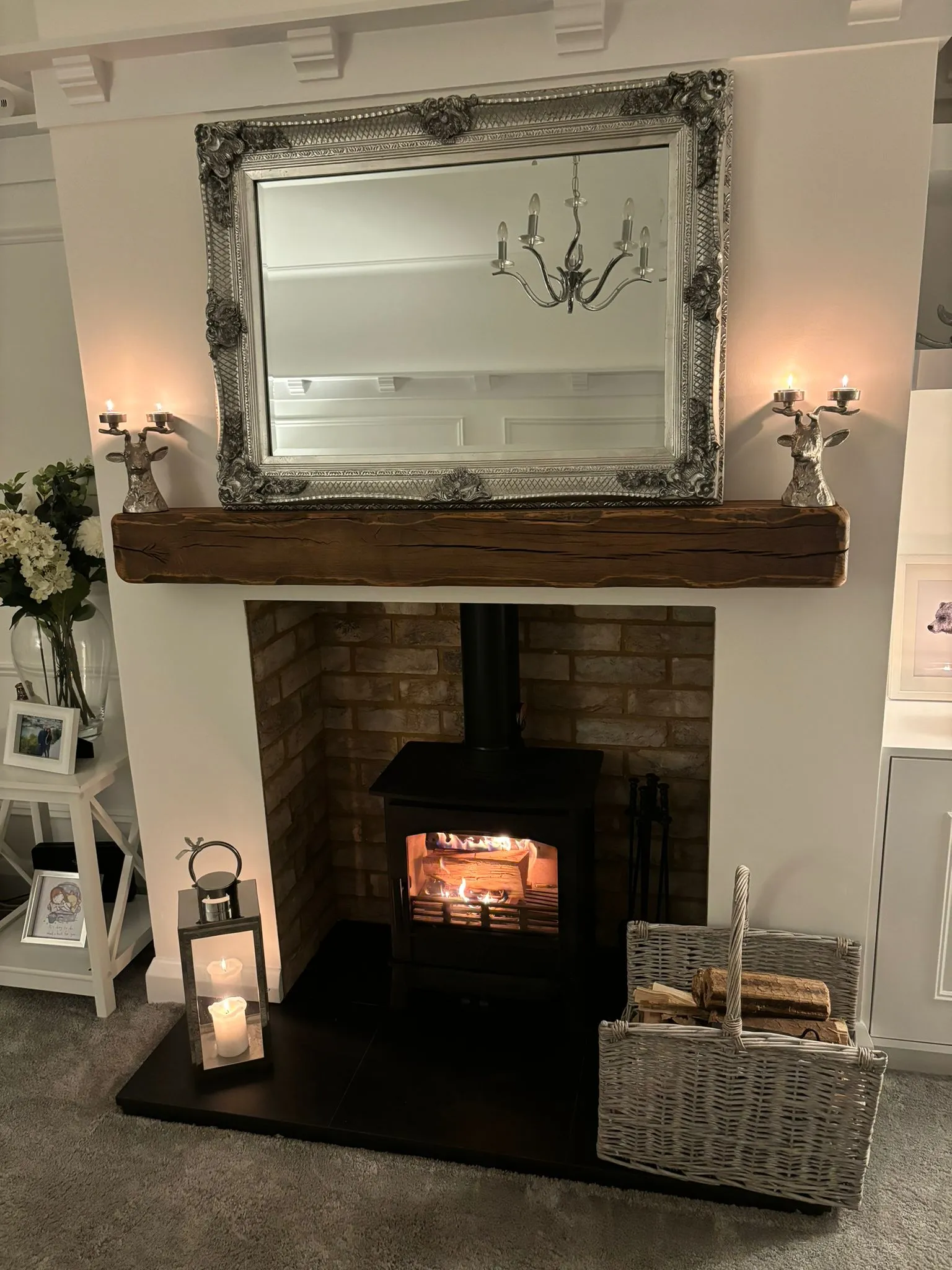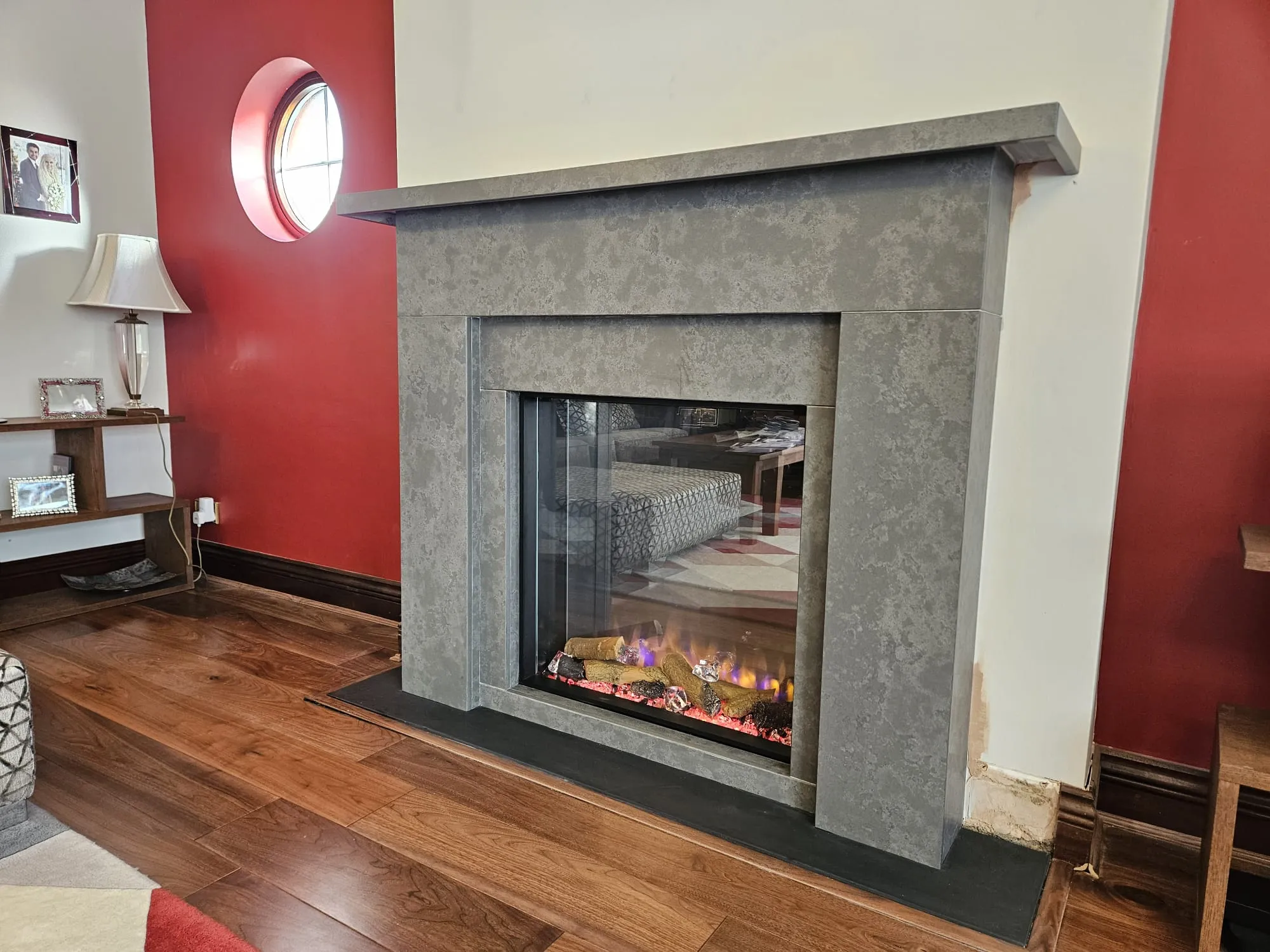
No chimney? You can still enjoy a real fire. Here’s how a twin-wall flue system works, where it can run and what to expect.
By The Bella Bespoke team · HETAS registered installers, Westcliff-on-Sea
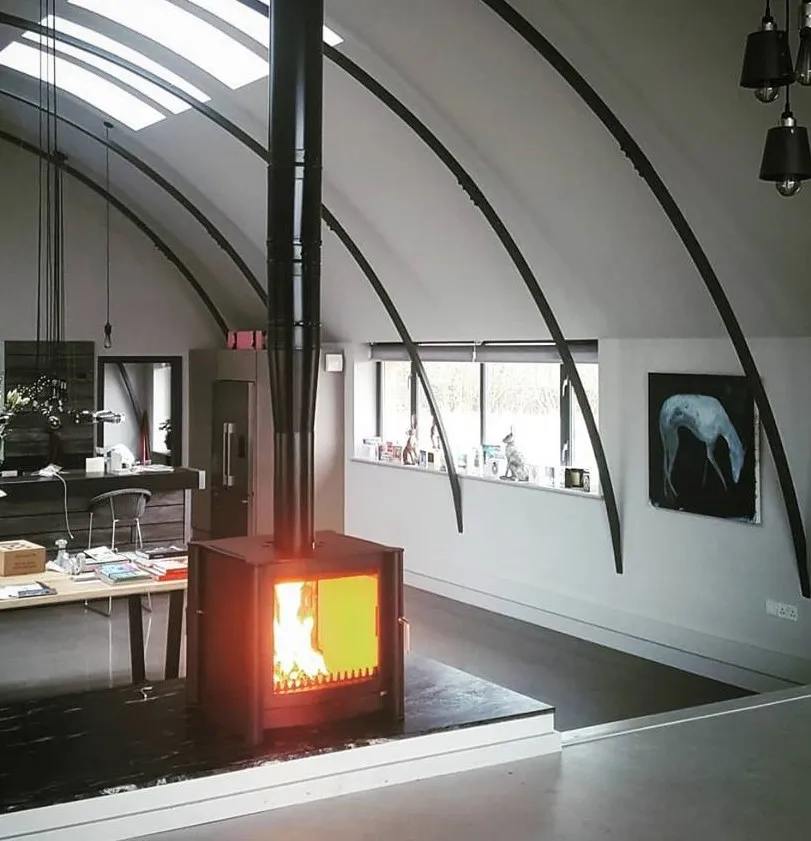
Yes — you can have a log burner without a chimney by fitting an insulated twin-wall flue system. Twin-wall flue is made of two stainless steel skins with insulation between them, which keeps the outer surface cooler and the flue gases hot enough to draw properly.
How does a twin-wall flue work?
The inner skin carries smoke and gases from the stove; the insulation keeps them hot so the flue draws well and condensation is reduced; and the outer skin protects the building. Because it is insulated, it can safely pass through floors, ceilings and roofs with the right fittings and clearances.
Where can a twin-wall flue run?
- Internally, straight up through ceilings and out of the roof. This is the most efficient route, and it can be boxed in on upper floors.
- Externally, out through a wall behind the stove and up the outside of the building.
- As a feature, left exposed in a vaulted or open-plan room — like the arched room pictured above.
What rules apply?
The Building Regulations (Approved Document J) control:
- The height of the flue terminal above the roof, and its distance from windows, roof lights and neighbouring buildings.
- Clearances to combustible materials where it passes through floors and roofs.
- The number of bends and length of horizontal runs.
- Fire-stopping, supports and access for sweeping.
That’s why flue design is part of every survey we do. Read more about building regulations for log burners.
Do I need planning permission?
Often an internal flue doesn’t need planning permission, but an external flue, a listed building or a conservation area can change that. Check with your council early.
Is a twin-wall flue a good option for an extension?
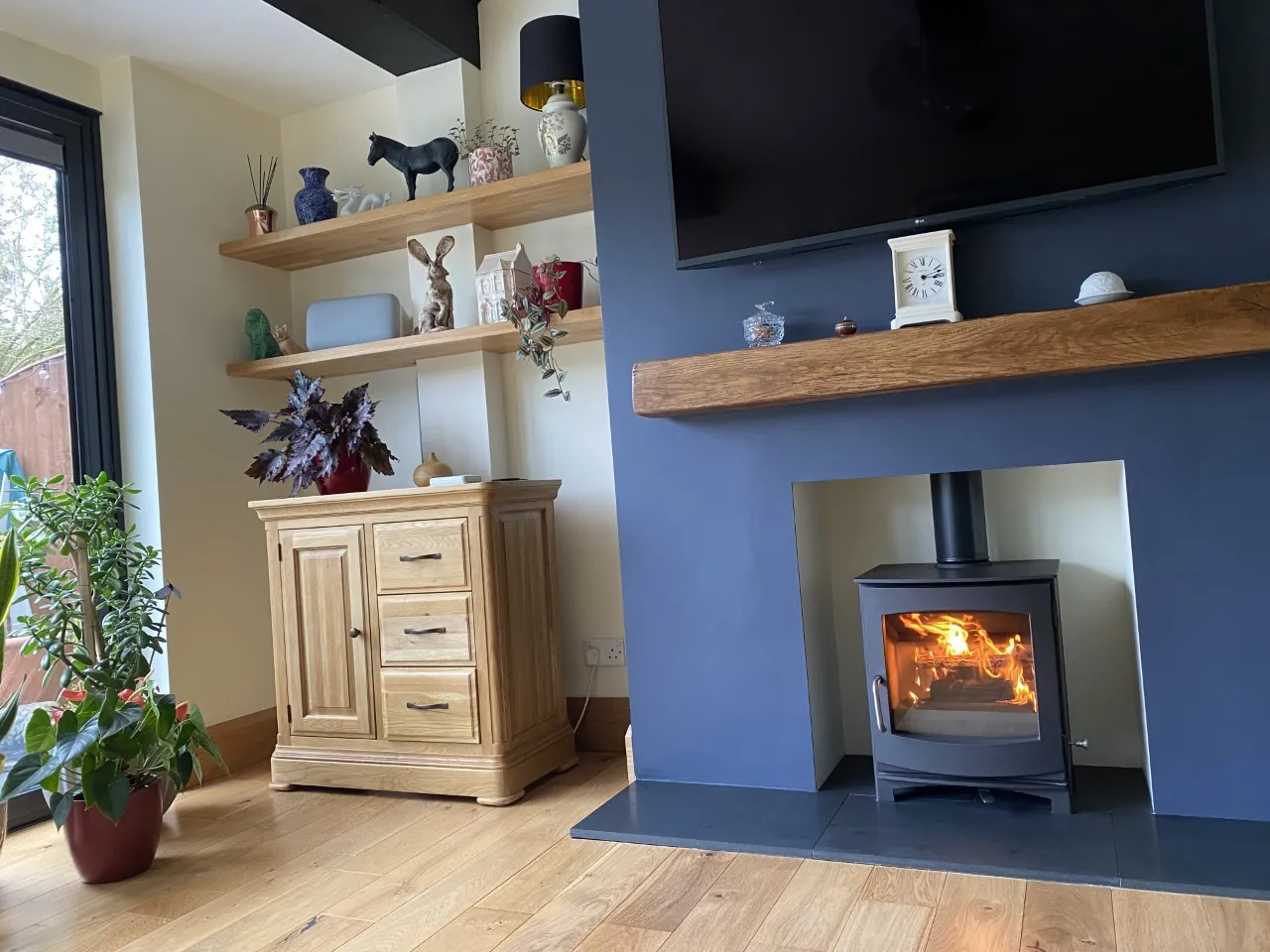
It’s ideal. Extensions and new builds rarely have a chimney, and an exposed black flue suits modern interiors. Pair it with a freestanding stove and a stone or brick slip backdrop for a real focal point — see our brick slip range.
Thinking about a stove where there’s no chimney? Book a free survey and we’ll design the safest, neatest flue route for your home.
Frequently asked questions
Yes, when it is the correct system for the appliance and is installed to the Building Regulations and manufacturer’s instructions. It must be certified by a HETAS registered installer or approved by building control.
Yes. It can exit through a wall and run up the outside of the building, which avoids cutting through upper floors. It needs the right supports and must terminate at the correct height relative to the roof.
Often not, but it depends on the property and location — rules differ for listed buildings, conservation areas and some flue positions. Check with your local planning authority before work starts.
Want expert advice for your home?
Book a free, no-obligation survey with our HETAS registered team.
- #twin wall flue
- #flue
- #log burners
- #new builds